No salvage plan announced yet ...April 24, 2008As yet, no salvage plan has been announced and no request for bids posted on recovering the equipment from Robson Bight. Knowing the amount of planning it will take to make this recovery happen, we are becoming concerned that the government is not committed to the salvage operation before the whales return in June. Environment Minister Barry Penner stated in a Vancouver Sun article on April 19 that it was going to be, "a real challenge to marshal enough equipment and resources to do this before mid-June." The longer we wait, the more fragile the fuel tank will be to recover. Hope for the whales of Robson BightApril 18, 2008Fisheries and Oceans Canada Minister Loyala Hearn and B.C. Minister of the Environment Barry Penner announced that the two governments had entered into a cost sharing agreement to raise the logging equipment that sunk in Robson Bight last August. Living Oceans Society, Greenpeace Canada and concerned whale organizations are congratulating the governments of Canada and British Columbia for showing the leadership to mount a recovery operation. “We are delighted that this ticking time bomb will be removed, and we are hopeful that this happens before the whales return to Robson Bight this summer,” said Jennifer Lash, Executive Director of Living Oceans Society. “It is crucial that the government put the salvage operation up for bid immediately so that the work can begin as soon as is possible.” Though no definite time line for the operation was stated, subsequent comments by Minister Penner clearly indicated that officials are aware that the Northern Resident orcas are expected to return by early summer. Raise Robson Bight wreckage now
The threat of the fuel truck leaking is not a barrier to recovery, as the Minister would have us believe. Nuytco Research, who conducted the underwater assessment, can cloak the truck while it is being pulled to the surface, ensuring that if the fuel tank does leak, the diesel remains enclosed and can be safely removed from the ocean.
How long we have before the fuel truck begins to leak due to corrosion
is anyone’s guess, but we can’t afford to gamble. Despite the Coast Guard’s claim last fall that the fuel truck imploded and all diesel had been released, video filmed in December reveals that the fuel truck is sitting upright on the seafloor and appears intact. Likewise, six of the other pieces of logging equipment are sitting upright on the seafloor, intact. |
Intact fuel truck a ticking time bomb
February 12, 2007: On February 11, the B.C. Ministry of Environment (MoE) posted a video shot during the underwater investigation of Robson Bight last December. There is every reason to believe that the sunken fuel truck’s 10,000 litre tank is full of diesel and should be removed from the bottom of Robson Bight.
Living Oceans Society has not yet been provided with a copy of the video or a report on the operation. As soon as we have a copy of the final report prepared for MoE, we will conduct a full analysis of the situation.
UNDERWATER INVESTIGATION | December 2007
December 17, 2007: We wrapped up the underwater investigation on Saturday, after successfully locating all the spilled equipment. For the record, here’swhat we found on the bottom of Robson Bight:
The B.C. Ministry of Environment has agreed to give Living Oceans acopy of the footage. When we have received it we will review itthoroughly and consider Nuytco’s advice before making recommendationson next steps.
A big thank you to Nuytco and the crew of the Aurora Explorer for a job well done!
December 12, 2007: The first day of submarine activities was eventful. Jeff Heaton of Nuytco piloted on the first dive and located the fuel truck within anhour. He was able to capture high quality videotape of the truck.
The fuel truck is sitting upright in 1,150 feet of water, in sediment up to its axles. It is in one piece, with some deformation on each end(i.e. they are concave). We will wait until experts have had a chance to analyze the videotape before drawing any firm conclusions or speculating on the next steps.
Doug Bishop piloted the second dive. He found three pieces of equipment. We will tell you what they are once we have seen thefootage.
Our working vessel is the Aurora Explorer of Campbell River. Those on board include Andjela Knezevic-Stevanovic of the B.C. Ministry of the Environment, DanielReid of the Canadian Coast Guard, Jim Borrowman of Stubbs Island Whale Watching, Doug Aberley and Michael Berry representing the ‘Namgis First Nation, and Dorthea Hangaard of Living Oceans Society. A pod of transient orca whales also visited.
Many thanks to Bill Mackay of Mackay Whale Watching for bringing media out to witness this event.
December 3, 2007: After three sunny, calm days in Robson Bight last week, Nuytco identified seven targets (possible pieces of equipment) using rotaryscan equipment. Some of these targets could be pile-ups of equipment and some could be geological features. We won’t know for sure until as ubmarine goes down for a look. Previous sidescan work by the Canadian Coast Guard vessel, the Tully was extremely useful in narrowing down our search area.
Our “Vessel of Opportunity” was the Lukwa , a local whale watching boat owned by Jim Borrowman. Also on boardwere representatives from the B.C. Ministry of the Environment, the Canadian Coast Guard, two Nuytco staff, two Robson Bight park wardens and Dorthea Hangaard from Living Oceans. The ‘Namgis visited on the first day.
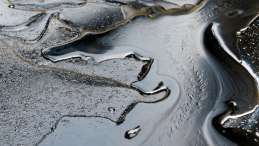
On two out of the three days we encountered petroleum on the surface of the water, always in the afternoon.
The next step is to launch a manned submersible to visit these sites and videotape the wreckage. The submarine will be deployed this Friday,December 7th, weather permitting. After watching the rotary scan heads drop to depths of over 350 metres we have a renewed appreciation for the remarkable depth this equipment is sitting at.
November 23, 2007-The provincial and federal governments have contracted deep sea dive expert Phil Nuytten to inspect the logging wreckage in Robson Bight and make recommendations on the next steps.The first phase of the investigation is scheduled to begin this Tuesday, November 27th, weather permitting. The first phase is likely to include rotary scanning and side scanning which will attempt to pinpoint the exact location of the logging equipment and fuel truck.The second phase will deploy a manned submersible to capture underwater footage of the equipment.
Living Oceans has been invited on-board the working vessel as an observer for the duration of the investigation, and the Province hasagreed to provide us with a copy of underwater footage.
October 20, 2007: Hours after Living Oceans and Greenpeace announced the date of our underwater investigation of Robson Bight, the federal and provincial governments stepped forward and said that they would collaborate on their own underwater investigation.
“We’re very pleased that both levels of government are cooperating to find out what’s happening on the seafloor of Robson Bight,” saidJennifer Lash, Living Oceans Society’s Executive Director. “We need to make sure that the investigation is transparent and happens in a timelymanner. We’re looking forward to finding out more details next week.”
October 19, 2007:
The federal and provincial governments remain divided on whether or no tan underwater investigation should take place in Robson Bight. The province still supports the investigation, while the Coast Guard and Environment Canada do not. Meanwhile, regular reports of diesel and other oily substances on the water over the logging wreckage continue to come in. Twyla Roscovich has put together a five minute documentary on this subject, which can be viewed below ("After the Spill").
Thanks to your support (with a special thanks to Greenpeace Canada!), we now have over $40,000 and have booked sidescan equipment and a manned submersible from Phil Nuytten of Nuytco. The sidescan isset to commence October 30th, depending on the weather. We will be filming the event, as well as the wreckage, so check back here for updates.
After the Spill | Calling From the Coast video of Robson Bight six weeks after the barge spill. Produced by Twyla Roscovich.
August 28, 2007 -
Greenpeace, Living Oceans Society, and whale watching companies todaycalled on the Harper and Campbell governments to investigate a dieselspill that took place inside an ecological reserve, threatening apopulation of orca whales.
“We are calling on the federal and provincialgovernments to launch a submersible camera to immediately inspect thewreckage and develop a strategy to contain any leaks. If the governmentis negligent in their responsibility to protect this vital whalehabitat and marine ecosystem, then we will take action ourselves.”
- Jennifer Lash of Living Oceans Society
Below: CBC News broadcast, August 21, 2007
On August 20 a barge carrying heavy equipmentspilled its contents, including a truck carrying diesel fuel, into theMichael Bigg Ecological Reserve at Robson Bight. The spill happened 886meters inside the reserve boundary.
Living Oceans Society shot this video over the barge at the northernboundary of the reserve at 2:00 pm on August 20.
The fuel truck and other logging equipment arelaying at a depth of 350 metres. The truck is estimated to hold 10,000litres of diesel fuel. While some fuel has spilled into the ocean,there is the possibility of over 9,000 litres remaining at the bottomof the ocean. Neither the federal nor provincial governments have madeany attempt to inspect the wreckage and determine the extent of theclean up required.
Watch a CBC slideshow of the barge before and after the spill.
Hear OrcaLab’s hydrophone recording of the barge spill. Two family groups of orcas (I15s & I33s)were nearby in Robson Bight when the incident happened. They were vocalbefore the accident and during the intense sounds that accompanied theequipment as it fell to the ocean floor.


In
order for the equipment to be safely removed in time, the government
must take immediate action.